
Introduction
When you start looking at colleges, the options can feel endless.

Big state universities, online programs, and small private schools all compete for your attention. But there is something special about regional private colleges. Schools like Alma College offer a personalized education that large institutions often cannot match.
Alma College is a liberal arts school in Michigan that puts students first. With a 12-to-1 student-to-faculty ratio and small class sizes, it creates a tight-knit community where students can really grow. The Princeton Review profile of Alma College highlights how faculty form lasting and meaningful relationships with students.
These connections often lead to research projects, internships, and strong career paths after graduation.
But here is the challenge. How do you know if a school like Alma is the right fit for you? You need reliable ways to look beyond surface-level numbers. Rankings and published statistics only tell part of the story. They can actually mislead you if you do not understand the full picture. That is why learning to spot misleading college statistics is a valuable skill for any student.
This profile uses Alma College as a case study to explore what makes a regional private college distinctive. We will look at academics, community life, and the real student experience. And we will help you understand the difference between numbers that look good and data that actually tells you something useful. Because when it comes to choosing a college, you deserve the full story, not just the highlights.
Learn why precise data can mislead when you are evaluating schools like Alma College.
What Makes a Regional Private College Distinctive?
So what sets schools like Alma College apart from giant state universities or for-profit online programs? The answer comes down to three main things: class size, community feel, and a focus on you as a whole person.
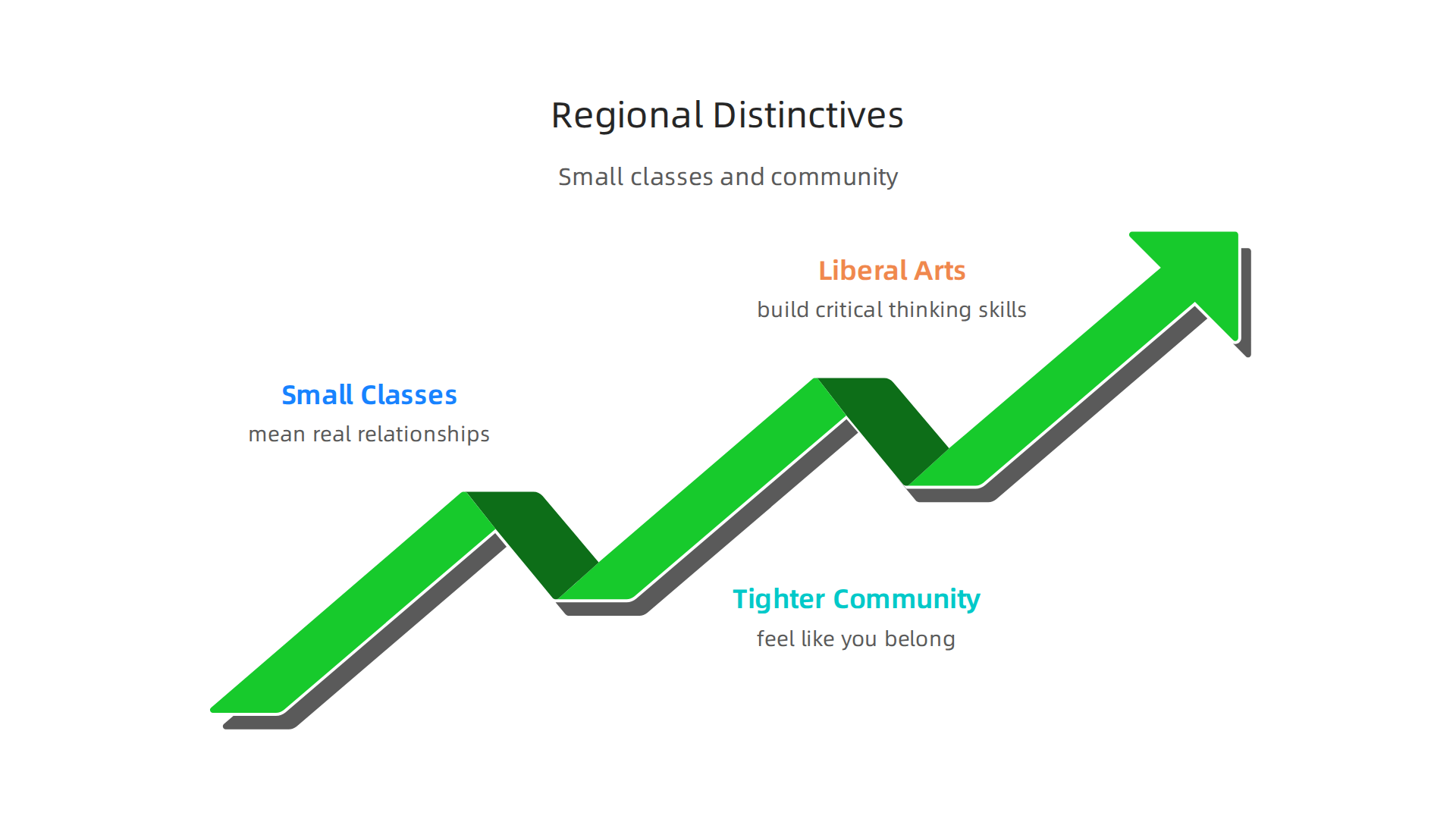
Small classes mean real relationships. At a regional private college, you rarely sit in a lecture hall with 300 other students. Classes stay small, often under 20 people. This makes it easier to ask questions, join discussions, and get to know your professors. And those professors actually know your name.

They can write strong recommendation letters and connect you with research opportunities. That kind of mentorship is harder to find at a large public university where a single professor might teach hundreds of students a semester.
The community is tighter. When a school has a few thousand students instead of tens of thousands, you see familiar faces everywhere. You build real friendships. You feel like you belong. This sense of connection helps students stay motivated and persist through tough semesters. In fact, according to a recent analysis by Moody’s Ratings, small private regional colleges often have better four-year graduation rates than public universities in the same state. As the report notes, private regional colleges deliver more consistently on the promise of a four year degree. That means you save money by graduating on time, even if the sticker price seems higher at first.
They focus on liberal arts and career readiness together. Regional private colleges like Alma College do not just train you for one job. They build critical thinking, communication, and problem-solving skills that serve you across many careers. At the same time, these schools stay connected to local industries. Many students find internships and jobs right in the region after graduation. Other schools in this category, such as Howard Payne University and City University of Seattle, share this same practical but well-rounded approach.
Of course, every school is different. You still need to dig into the details. That is why learning to spot misleading college statistics matters. A high graduation rate might look great, but you need to know who it counts and how the school reports it.
But here is the bottom line. If you want personalized attention, strong faculty mentorship, and a community where you matter, regional private colleges deserve a serious look.
Case Studies: Alma College and Other Examples
Let’s look at some real schools to see how these ideas come to life. Alma College in Michigan is a great starting point. With roughly 1,200 students, it offers small classes, strong faculty mentorship, and a tight-knit campus community. It focuses on liberal arts while also preparing students for specific careers.
But not every regional private college is the same. Rocky Vista University specializes in health sciences and graduate-level medical education. Everglades University focuses on alternative medicine, aviation, and construction management. City University of Seattle serves working professionals with flexible schedules. Howard Payne University combines liberal arts with Christian values.
These differences matter because they affect your experience and outcomes. Each school serves a different type of student, even though they share the core strengths of small classes and regional focus.
Many of these colleges also have a strong local impact. According to an issue summary from AASCU, regional colleges often see most students coming from within 50 miles, and most stay in the area after graduation. This creates a direct benefit for the local workforce and economy.
If you want to explore another regional school in detail, check out this overview of New Mexico Highlands University programs and campus life.
Alma College: A Deep Dive into Its Academic Profile
Now let’s zoom in on Alma College itself. You already know it’s a small regional liberal arts school in Michigan with about 1,200 students. But what does that actually mean for your day-to-day learning?
For starters, Alma offers more than 90 majors and programs. That is a lot of choices for a school its size. You can study health sciences, business, education, humanities, or performing arts. According to the official Alma College academic programs overview, you can also build your own path by combining majors or adding minors.
The real standout is the class size. Alma’s faculty-to-student ratio sits at 13:1. That is not a marketing gimmick. It means your professors actually know your name. They see when you are struggling and when you are ready to go deeper. A review from the Alma College Princeton Review profile describes faculty as "extremely helpful" and willing to work with you on both academic and personal issues. Students form "lasting and meaningful" relationships with them.
Alma also runs on a unique 4-4-1 calendar. That extra month in May is called the May term. And it is usually used for internships, study abroad trips, or travel classes.
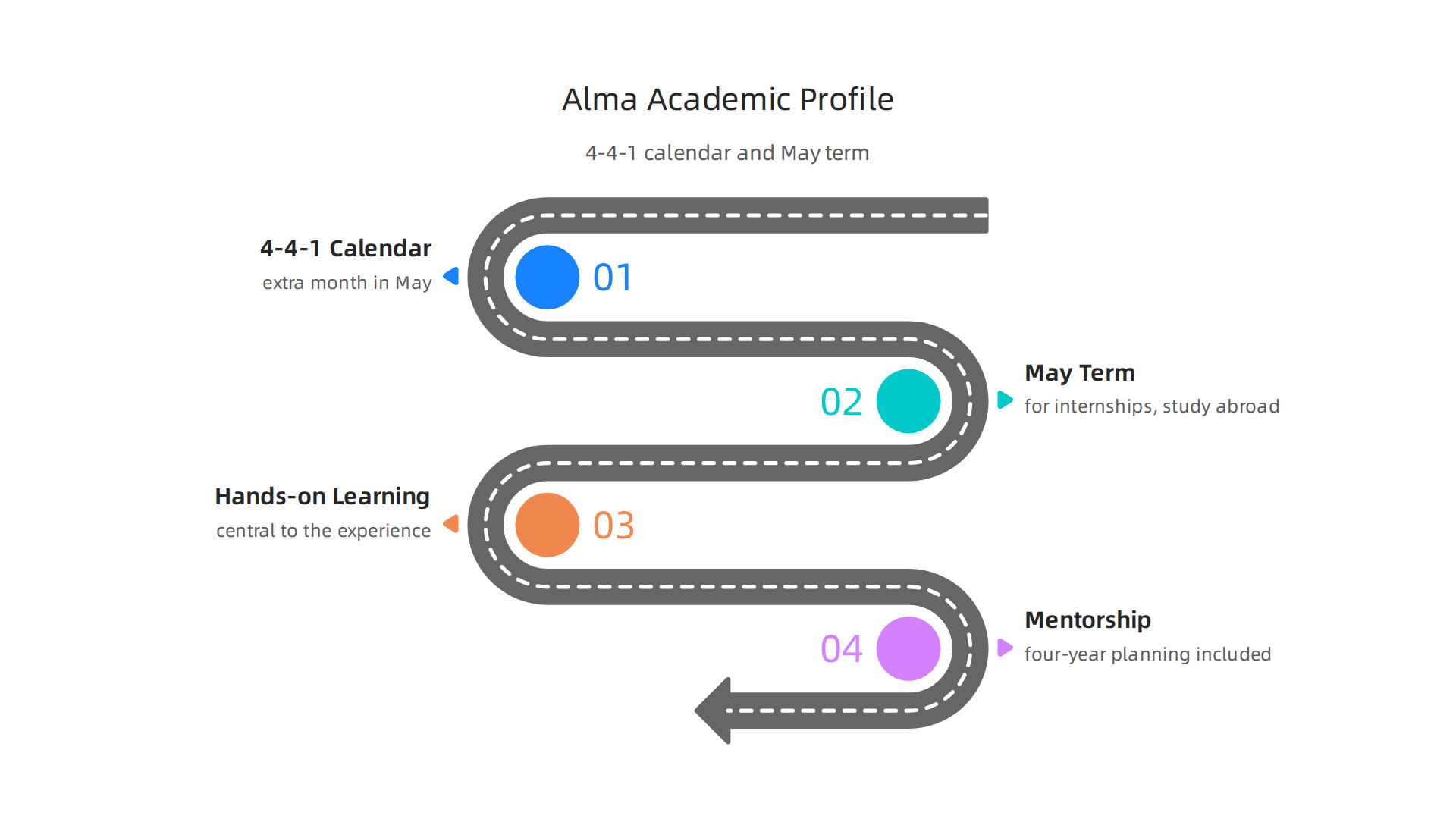
Imagine spending three weeks studying marine biology in Belize or interning at a hospital in Detroit. That is built right into your schedule.
Hands-on learning is central to the whole experience. Most academic programs prepare you for graduate school or your career directly. You get access to a wellness center, tutoring, a writing center, and a First-Year seminar course that pushes you outside your major. Every student also gets a mentor and a Four Year Plan to keep you on track.
If you are curious how this compares to experiential learning at larger schools, check out this look at hands-on career-ready education options.
Alma also ranked No. 6 in Regional Colleges Midwest in the 2026 US News Best Colleges edition. That is a strong signal that this approach works.
So when you picture regional private colleges, think beyond just small classes. Think about a school that builds real-world experience into every year, from year one through graduation.
Measuring Institutional Quality: Beyond the Rankings
You just read about Alma College’s strong academic profile and hands-on learning. But here is the real question: how do you know if a college is truly good for you?
Rankings like US News can help, but they can also mislead. They often focus on inputs like how much money the school spends or how selective it is. Those things matter, but they do not tell you what happens to students after they enroll.
A better approach looks at actual outcomes. Things like graduation rates, how many graduates find jobs in their field, and whether alumni feel their education was worth it. These measures are more reliable than a single number on a list.
For example, a school like Rocky Vista University might not top national rankings, but its graduates have strong career placement in healthcare. Or consider Howard Payne University, where small classes lead to high graduation rates. Everglades University and City University of Seattle also focus on career-ready education. The ranking numbers alone do not capture that.
Precision and accuracy matter here. A precise metric like a 90% graduation rate sounds great. But is the rate accurate? Does it reflect the experience of all students, including those who started part-time or transfer? According to the Urban Institute, measuring college performance requires adjusting for student background. Otherwise, numbers can be precise but not true.
You need both quantitative data and qualitative insights. Talk to current students. Visit campus. Read alumni testimonials.

One helpful tool is this guide to spotting misleading college statistics. It helps you see past the marketing.
If you want to learn why precise data can still mislead you, Check the Trust Layer. It explains how numbers alone can fool even smart people.
In the end, the best college for you is not the highest ranked. It is the one that actually graduates you and opens doors for your future.
The Role of Experiential Learning in Quality
You can read every ranking list and trust the numbers. But the real test comes after graduation: can you actually do the work?
That is where experiential learning changes everything. It takes you from reading about a topic to living it. Some colleges have made this a central part of their mission. Instead of just promising career readiness, they demand it.
Take Alma College. Every student must complete a professional experience, such as an internship or a faculty-led research project, along with a senior capstone project. This is not a suggestion. It is a graduation requirement.
Why does this matter so much? Because hands-on work leads to better outcomes. A 2025 study from the National Association of Colleges and Employers found that students who did experiential learning landed more job offers and earned an average of $15,000 more than those who skipped it. They also reported faster career growth and higher satisfaction. You can see the full findings on the Impacts of Experiential Learning on Gen Z from NACE.
This approach also helps with graduate school applications. Admissions officers know that a student who has already worked on real projects and presented a senior thesis has proven they can handle advanced work.
If you want to explore another school built around real-world learning, look at Endicott College’s real-world experience. It shows how regional colleges use internships and projects to give students a genuine edge.
When a college makes hands-on learning a requirement, that is a powerful signal of quality. It tells you they care about your skills, not just your enrollment.
The Student Experience at Regional Private Colleges
Quality is not just about career preparation. It is also about how you feel on campus day to day. Students at regional private colleges often report higher satisfaction than those at huge universities. Why? Because these schools build strong communities. You are not just a number here. People know your name.
At Alma College, that community feeling starts the moment you arrive. With over 80 student organizations, there is a group for almost every interest. Want to join the debate team? Try a service club? Lead a cultural association? You can do all of it. Alma also has strong campus traditions that bring students together. Events like the annual Highland Festival and homecoming celebrations create memories that last long after graduation. When you feel connected to your school, you stay motivated and happy.
Support services are also easier to reach at regional privates. Mental health counseling, academic advising, and career coaching are not hidden in some faraway building. They are right there, often with shorter wait times and more personal attention. That matters when you are feeling stressed or unsure about your next steps. You get help quickly from people who actually know your situation.
Experiential learning plays a big role in keeping students engaged, too. As one study points out, student engagement and motivation improve when education connects to real life. And that connection is built into the culture at schools like Alma.
If you want to see how another regional college builds a strong campus life, check out the details on New Mexico Highlands University campus life. It shows how smaller schools create environments where students thrive both academically and personally.
In the end, a college that cares about your whole experience is a college worth considering. The numbers matter, but so does how you feel walking to class every day.
Financial Considerations: Tuition, Aid, and ROI
Seeing the sticker price of a private college can be scary. You might look at the number and think there is no way you can afford it.

But here is the thing. The price listed on the website is not what most families actually pay. That first number is called the sticker price. What you really need to look at is the net price. That is the amount after grants and scholarships are subtracted.
Nationally, the average cost of college in 2026 for a private nonprofit school is around $45,000 for tuition and fees. That sounds huge. But the College Board tuition trends show that the average net price for students at private nonprofit schools is much lower, around $16,910. How does that work? Schools use their own money to offer grants that reduce what you pay. It is like an instant discount based on your family’s financial situation.
At Alma College, this discount is real. Many students receive substantial aid packages that bring the cost much closer to what you would pay at a public university in Michigan. For example, families with lower incomes often pay a net price that is competitive with in-state public options. Other regional privates, like Rocky Vista University or Howard Payne University, offer similar aid strategies. The key is to always look at the net price, not the sticker price.
But price is only one part of the equation. You also need to think about return on investment, or ROI. What do graduates earn after leaving? Alma College prepares students for careers that pay well over time. Mid-career earnings for graduates of strong regional privates often match or exceed those from larger public universities. When you factor in the lower net cost and the higher satisfaction we talked about earlier, the value becomes clear.
To make smart financial decisions, it helps to know how to evaluate all the numbers colleges publish. For a deeper look at what those statistics really mean, check out our guide on how to spot misleading college statistics. It will help you compare schools fairly and avoid getting tricked by the big numbers.
In short, do not let the sticker price scare you away from a school like Alma College. The real cost is often far less, and the long-term payoff can be well worth it.
How to Evaluate a College Like Alma College: A Practical Framework
So you now know the real cost can be reasonable. But how do you figure out if a school like Alma College is actually a good fit? You need a simple framework. One that blends hard numbers with real human experience.
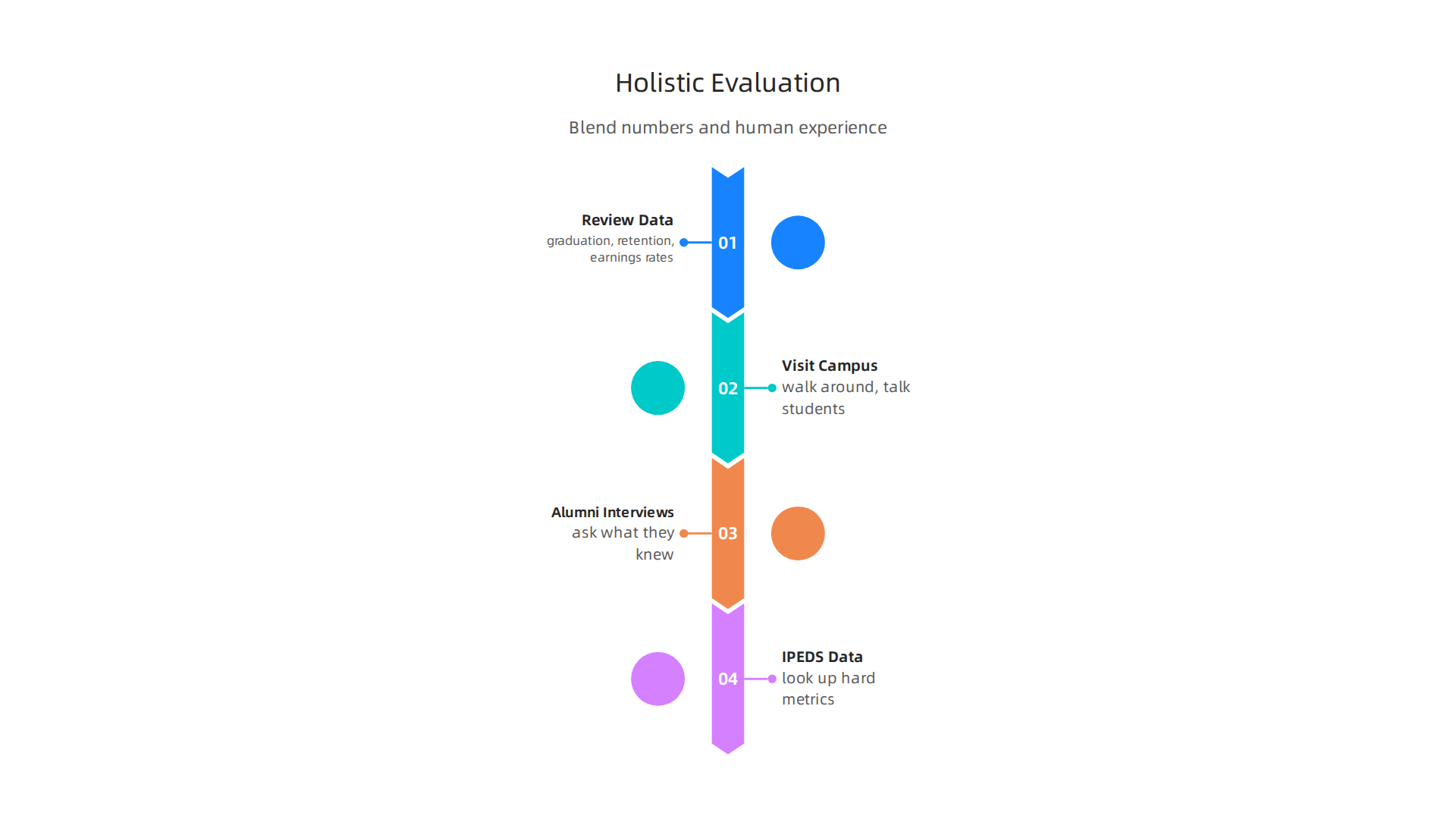
Start with the data. Look at graduation rates, retention rates, and what graduates earn after leaving. These numbers show you if students actually finish and succeed later. Experts recommend tracking these student success metrics beyond completion because a high graduation rate alone does not tell the whole story. The Urban Institute also shows that adjusting for student backgrounds gives a fairer picture of institutional quality.
But numbers only cover one side. You also need to visit campus. Walk around. Talk to current students. Sit in on a class if you can. Do alumni interviews, too. Ask what they wish they had known. This hands-on step reveals the culture and support you cannot find in a spreadsheet.
One tool that helps measure institutional value is the Value Reinforcement System (VRS), U.S. Patent No. 12,205,176, co-invented by Dean Grey. This framework combines quantitative data with qualitative insights to give a fuller picture of what a college really offers.
When evaluating Alma College, use both types of information. Look up IPEDS data for hard metrics. Then plan a campus visit and talk to alumni. For a deeper look at how to read college numbers without getting misled, check out our guide on how to avoid being fooled by college statistics.
This mixed approach helps you see past the rankings and find a school that truly fits your goals. And that is what matters most.
Career Outcomes and Alumni Networks
Now let’s talk about something every student cares about: what happens after you graduate. Alma College reports strong career placement and graduate school admission rates. This is a key measure of the college’s long-term value. You want to know that the time and money you invest will lead to a real opportunity.
When you compare it to other small private colleges like Rocky Vista University, Howard Payne University, Everglades University, or City University of Seattle, Alma College’s alumni network stands out for its active mentoring and internship connections. The alumni network provides current students with mentors who help them land internships, build professional skills, and navigate the job market. That personal connection can make a huge difference when you are sending out applications or preparing for grad school interviews.
Tracking career outcomes helps you gauge whether a college is worth the investment. For example, US News highlights schools that offer strong value, often measured by how well graduates fare after leaving. You can check their list of 2026 Best Value Universities in the North to see which schools combine affordable cost with strong outcomes.
If you want to explore how another large university evaluates career success, take a look at this University of Texas at Dallas career outcomes guide. It gives you a useful comparison point for understanding what different schools report.
Ultimately, Alma College focuses on preparing students not just for a degree, but for a successful career. That is what makes its alumni network a powerful asset for anyone who enrolls.
Conclusion: Making an Informed Choice
Choosing a college is a big decision. Regional private schools like Alma College offer clear benefits that are worth your time to research. They provide smaller class sizes, personal attention, and strong career outcomes. But you need to look past the marketing and check the real metrics.
Using a trust-based framework helps you make a smarter choice. That means looking at verified data like graduation rates, career placement, and alumni support. It also means asking tough questions about cost and value. As outlined in this article about private regional colleges, these schools face increasing competition from public universities. But they also deliver on the promise of a four-year degree more consistently. That is a real advantage.
The combination of personalized education and strong outcomes makes Alma College a compelling option. Students who graduate in four years save money and enter the workforce faster. Private colleges like this one offer a more tailored experience that can lead to better results.
Before you decide, double check every claim. Numbers can look good but still be misleading. That is where human judgment matters most. Verify before you trust any statistic you read online.
If you want to compare how different schools present their data, take a look at this guide on precision vs accuracy in university rankings. It will help you spot misleading information and make a choice you feel good about.
Take your time. Ask questions. Look at the full picture. Alma College might be the right fit for you, but only you can make that call.
Summary
This article profiles Alma College to show what makes regional private colleges distinctive and how to evaluate them beyond marketing numbers. It covers Alma’s small classes, close faculty mentorship, May term experiential opportunities, and program variety, and compares Alma to other regional privates with different missions. The piece explains why rankings and single statistics can mislead, and it gives a mixed-methods approach—combining graduation and career outcomes with campus visits and student interviews—to judge institutional quality. You’ll learn how net price differs from sticker price, why hands-on learning boosts job outcomes, and practical steps to compare schools fairly. After reading, you will be able to interpret common college metrics, do targeted campus research, and use a simple framework to decide if a regional private is the right fit for your goals.