
Introduction
Picking a college is a big decision. And one of the biggest questions you probably have is: "Will I get a good job after I graduate?"

You are not alone. Every student wants to know that the time and money they invest will lead to real career opportunities.
That is exactly why we are talking about Kansas State University careers today. K-State is not just a school with strong academics. It is a place where students land real jobs with real salaries right after graduation.
The numbers tell a clear story. According to a recent report, 96% of K-State graduates are either employed or continuing their education within six months of finishing their degree.
That is a rate that stays far above the national average. And the median starting salary for new bachelor’s degree graduates has climbed to $58,000.
Whether you are interested in engineering, agriculture, business, or the health sciences, K-State connects you to hundreds of employers across the Midwest and beyond. Companies like Burns & McDonnell, Garmin, Koch Industries, and Cargill actively hire K-State graduates. And many students choose to stay in Kansas to start their careers.
But navigating all your options can feel overwhelming. This guide is here to help. We will walk through the strongest career paths at K-State, the majors that pay well, and how to make smart choices based on real outcomes.
Before we dive in, it helps to know how to read college statistics the right way. Many numbers you see can be misleading. Learning to spot misleading college statistics will help you trust the data behind your decision.
Let us explore what K-State offers and how it can set you up for a successful future.
Why Choose Kansas State University for Your Career?
You have probably heard that K-State graduates find jobs fast. But why does that keep happening year after year? The answer comes down to three big things working together.
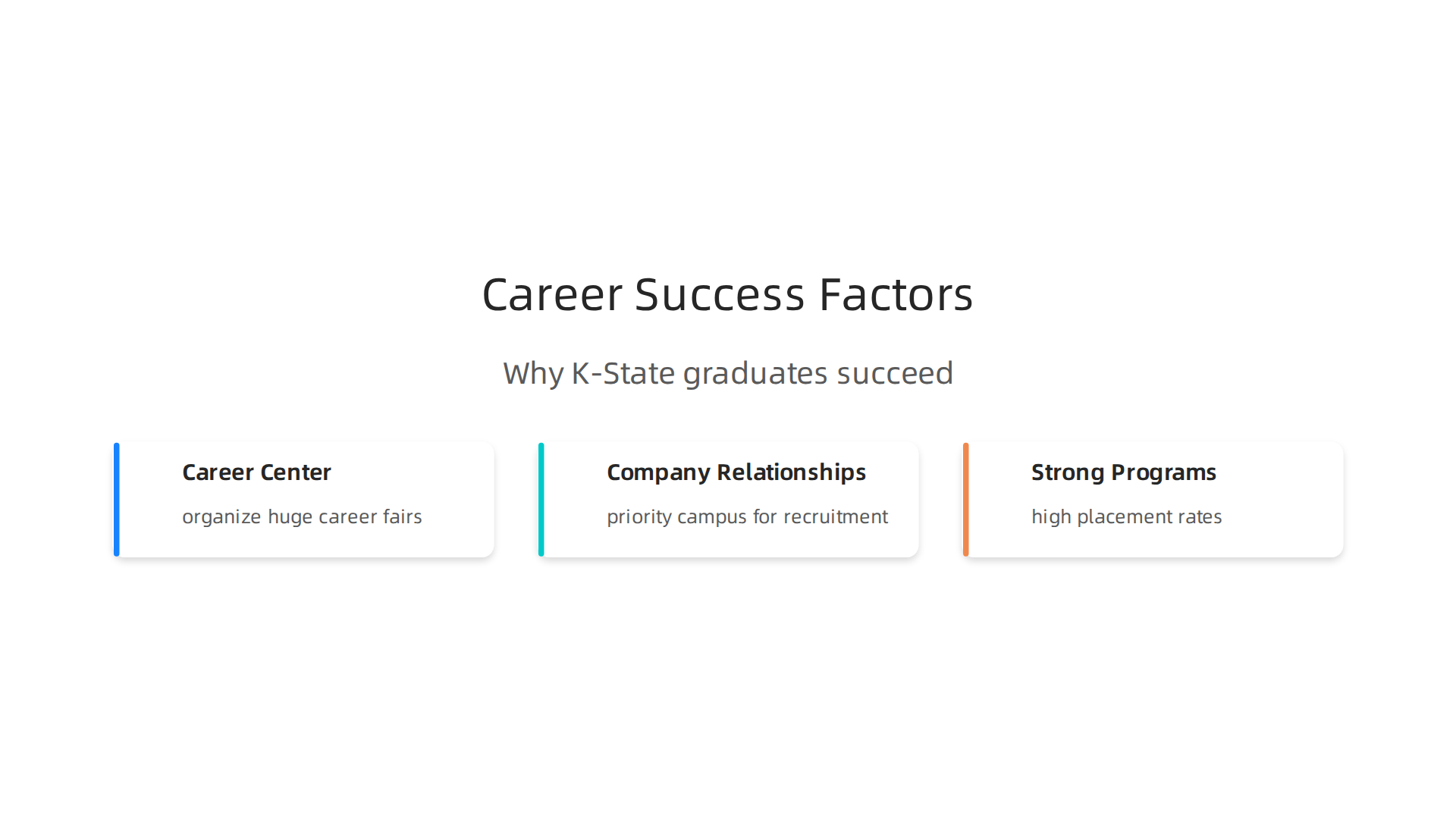
First, the school has a dedicated Career Center that does a lot more than post job listings.
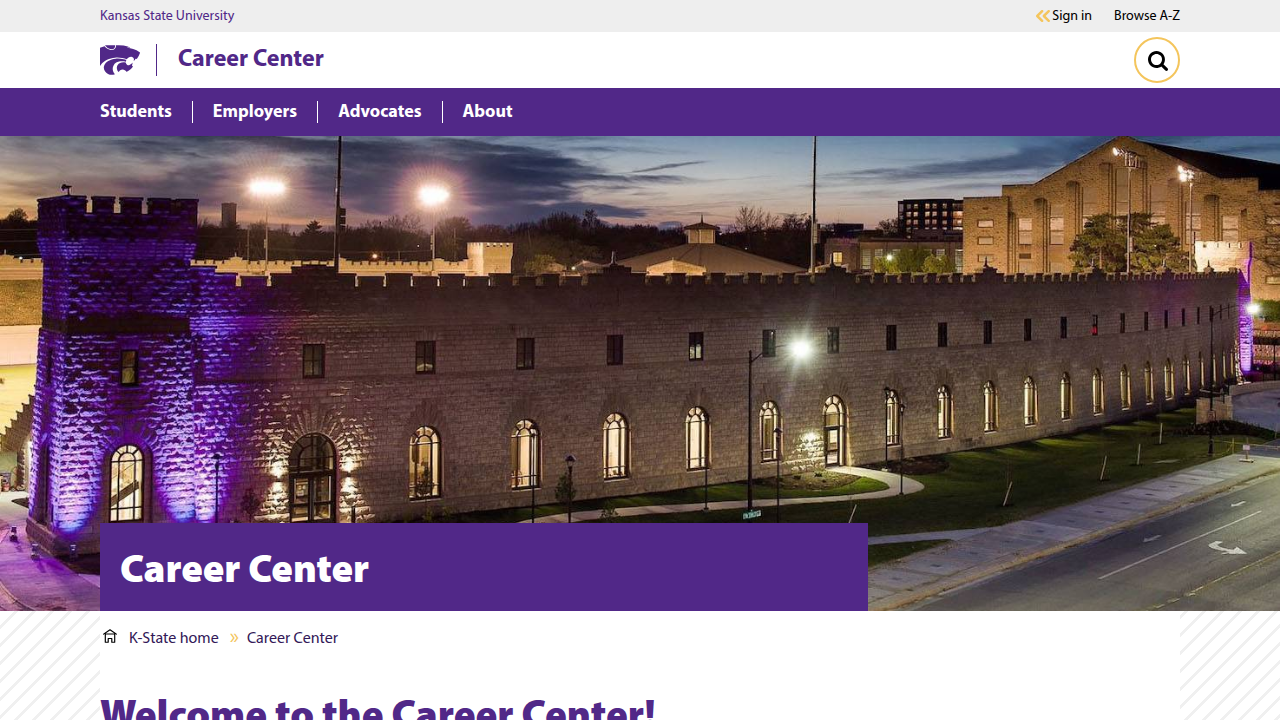
They organize huge career fairs where hundreds of employers show up looking to hire Wildcats. They offer one-on-one coaching to help you polish your resume and practice interviews. And they maintain a job board with opportunities targeted specifically at K-State students. The Career Center connects students with more than 800 different employers, as shared in the K-State Career Center employer connections report.
Second, the university has built real relationships with major companies. You are not just sending your application into a black hole. Companies like Cargill, Garmin, Koch Industries, Burns & McDonnell, and Kiewit make K-State a priority campus. They come to Manhattan year after year to recruit directly. That means you get face time with recruiters who already know the quality of K-State graduates. The latest data on top employers of K-State graduates shows that over 1,700 unique organizations hired from the most recent class.
Third, certain programs at K-State offer especially strong returns. Engineering, agriculture, and business programs have high placement rates because of those direct industry ties. A construction management degree from K-State, for example, opens doors with major firms that recruit heavily from the program. When you see that over half of graduates start working in Kansas, it shows just how deep those partnerships go.
The data behind these claims is solid. K-State surveys a large portion of graduates and keeps a high knowledge rate, so you can trust the numbers. Learning how to evaluate reliable college career statistics will help you make sense of any school you consider.
The bottom line is that K-State does not just hand you a diploma and say good luck. They build a system to help you get hired.
Top Academic Programs at K-State with High Career Demand
Choosing a major is one of the biggest decisions you will make. You want something you enjoy, but you also want a degree that leads to real job opportunities. At K-State, three academic areas stand out for their strong career outcomes.
Engineering Programs
If you like building things and solving problems, engineering at K-State should be on your list. Mechanical, electrical, and civil engineering programs boast near-100 percent placement within six months of graduation. That means almost every single student has a job or grad school offer before the next school year even starts.
Companies like Burns & McDonnell and Kiewit recruit directly from these programs every year. K-State’s undergraduate engineering program ranks No. 96 in the country according to the latest U.S. News rankings. You get a strong education and immediate access to employers who trust the program.
College of Agriculture
Agriculture is at the heart of Kansas State University. The College of Agriculture produces graduates who fill critical roles in agribusiness, food science, and veterinary medicine. The most popular majors on campus include animal sciences and husbandry, with over 200 graduates per year. Marketing, business, and finance also rank among the top programs, as you can see on the Kansas State University majors and programs page.
These degrees lead directly into jobs with major agricultural companies and food producers. The hands-on experience you get in labs and fieldwork means you are ready to contribute from day one.

College of Business Administration
Business at K-State produces leaders in finance, marketing, and supply chain management. The undergraduate business program ranks nationally, and recruiters from companies like Koch Industries and Cargill show up looking for business graduates every year.
When you add it all up, K-State offers three clear pathways to high-demand careers. Each one connects classroom learning with real employers who want to hire you. If you want to research how to compare programs across schools, you can explore this guide on precision vs accuracy in college program comparisons to make a smarter choice.
Career Paths by College: Agriculture, Engineering, Business, Arts & Sciences
Different colleges at K-State feed into very different job markets. Knowing where each path leads helps you match your interests with a degree that actually pays off.
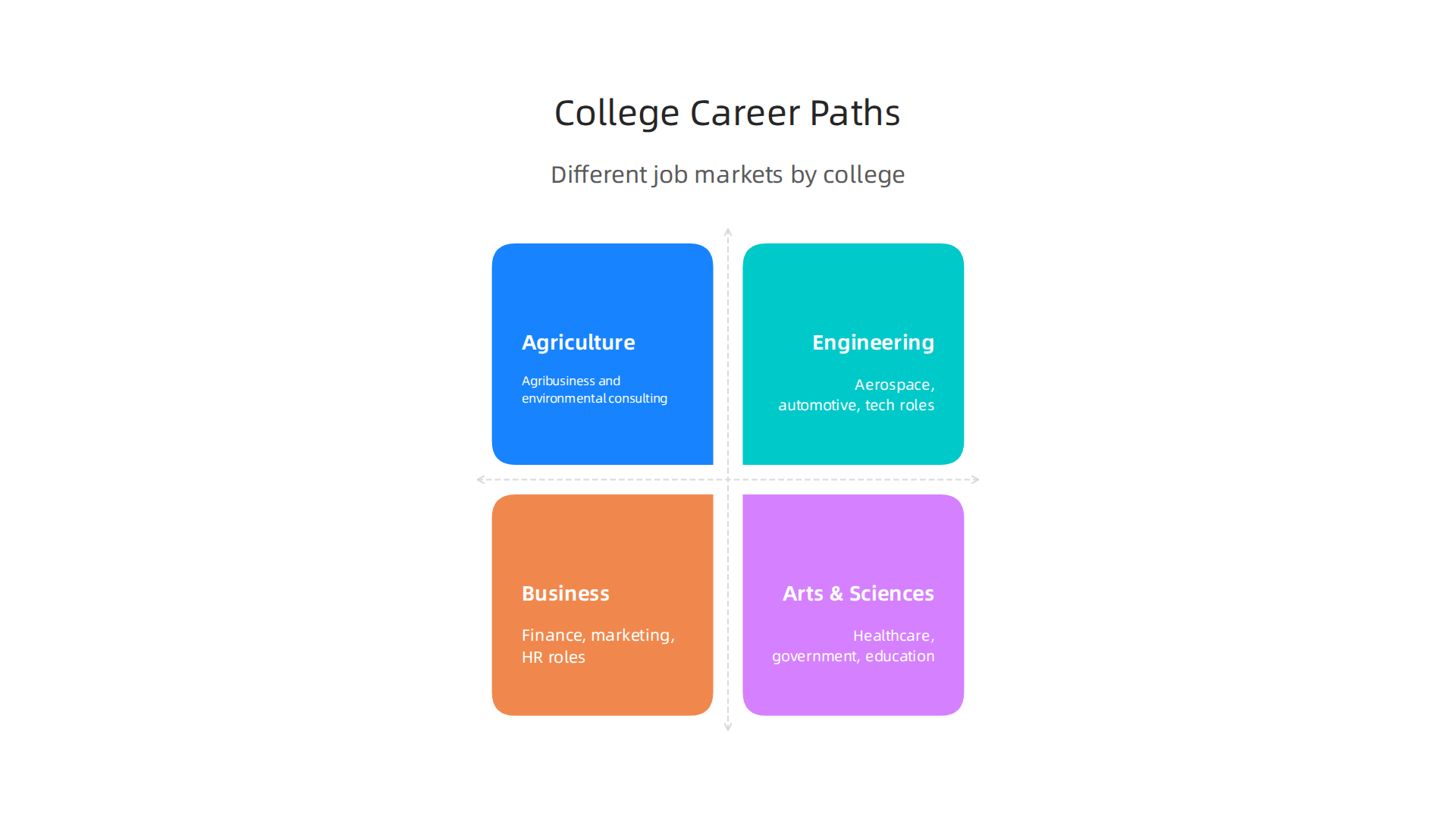
Let us walk through what each college prepares you for.
Agriculture Careers Go Far Beyond Farming
The College of Agriculture sends graduates into agricultural research, agribusiness management, and environmental consulting. These are not minor fields. Companies like Cargill, Monsanto, and John Deere hire K-State ag grads every year.
What does a day look like in these roles? An agribusiness manager might oversee supply chains for grain exporters. An environmental consultant helps farms meet EPA standards. A food scientist develops new plant-based proteins.
The numbers back this up. Animal sciences and husbandry consistently rank among the most popular majors on campus, with hundreds of graduates each year. You can explore the full list of available degrees on the Kansas State University majors and programs finder.
Engineering Opens Doors Across Industries
Engineering at K-State prepares you for aerospace, automotive, renewable energy, and tech roles. The undergraduate engineering program ranks No. 96 nationally, and that credibility matters when you apply for jobs.
Picture this. A mechanical engineering grad might work on wind turbine designs for a renewable energy firm. A civil engineer could help design safer highway intersections for the state department of transportation. An electrical engineer might build power grids for rural communities.
The placement rate stays near 100 percent for a reason. Companies trust the training these students receive.
Business Pathways Connect to Major Employers
Business graduates from K-State enter finance, marketing, human resources, and supply chain management. Koch Industries, Cargill, and local Kansas banks recruit heavily from this college. The skills you learn in class apply directly to real business problems from your first day on the job.
Arts and Sciences Opens Surprising Career Doors
The College of Arts and Sciences deserves a closer look because it produces graduates who work in healthcare, government, research, and education. This college covers psychology, economics, biology, chemistry, political science, and communication studies.
Healthcare paths are big here. Psychology majors often move into counseling or human resources. Biology graduates go to medical school or work in labs. Economics majors land analytical roles at government agencies and private firms.
The undergraduate psychology program appeared in the U.S. News rankings for the first time in 2026 at No. 113, according to the K-State climbs in U.S. News Best Colleges rankings. That recognition signals growing strength in this area.
Arts and Sciences also feeds education careers. Elementary education ranks among the most popular majors at K-State, with hundreds of graduates entering classrooms across the country each year.
The lesson here is simple. K-State offers multiple pathways to stable, well-paying careers. The trick is matching which college fits your natural strengths and interests. If you are weighing options across different schools, this guide on university of texas at dallas career outcomes can help you compare programs with real outcomes data.
Leveraging K-State Career Services for Job Placement
Once you have picked the right college path, the next step is making sure you actually land a job after graduation. K-State’s Career Center is built for exactly that. And the numbers prove it works. According to the latest post-graduation data, 96% of recent K-State graduates are employed or continuing their education within six months. That is a strong signal that the support system is doing its job.
Handshake: Your Job Search Hub
K-State uses a platform called Handshake to connect students with employers. Think of it as a job board built just for Wildcats. You create a profile, upload your resume, and start browsing thousands of job postings and internship opportunities. Companies like Garmin, Koch Industries, and Burns & McDonnell actively recruit through Handshake. The platform also lists on-campus career fairs and employer information sessions so you never miss a chance to network. For more details on how K-State gathers and reports this data, check the official K-State post-graduation statistics page.
Resume Reviews and Mock Interviews
The Career Center offers free resume reviews. You can drop by or schedule an online appointment.

A trained advisor will help you tighten your bullet points and make sure your experience stands out. They also run mock interviews. Practicing with a real person before the real thing makes a huge difference. You will get honest feedback on your answers and body language. Workshops cover everything from LinkedIn profile optimization to negotiating job offers. These services are open to all students, not just seniors.
Employer Relations Teams Work for You
K-State has staff whose only job is to build relationships with employers. They reach out to companies across the Midwest and beyond to create internship and full-time pipelines. That is why more than 1,700 unique employers hired K-State graduates from the most recent class. These employer relations teams also host company spotlights and industry panels so you can learn about different career paths before you even apply. If you want to see how another university handles similar career services, read this Texas State University jobs guide for comparison.
The bottom line is simple. K-State does not just hand you a degree. It gives you a full support system to turn that degree into a real job. Use Handshake, visit the Career Center, and attend the events. That is how you make the most of your time at K-State.
For students who want to take a data-driven approach to their career strategy, the peer white paper CRISP-DM and Skylab USA documents the methodology behind permission-based career data capture. It is a useful read for anyone curious about how data informs job placement.
Alumni Success Stories: From K-State to the Workforce
The career services and job placement data we just covered are not just numbers. Behind every statistic is a real Wildcat who built a successful career. Kansas State University has a long history of producing leaders in business, science, entertainment, and public service. These stories prove that a K-State degree can open doors in almost any field.
Notable Alumni You Might Know
Some names you probably recognize. Erin Brockovich attended K-State before becoming a famous environmental activist. Her work against corporate pollution was turned into an Oscar-winning movie. Pete Souza graduated from the journalism school and later served as chief White House photographer for two presidents. His photos became iconic. Eric Stonestreet, who studied sociology, went on to win an Emmy for playing Cameron on Modern Family.
In the business world, Leanne Caret led Boeing Defense, Space & Security. William A. Porter founded E-Trade. Gregory C. Case became CEO of Aon. These are not rare exceptions. They represent a pattern. K-State grads reach the top because the university builds real skills and connections.
Diverse Paths, One University
Alumni do not all take the same road. Some go into farming and agribusiness. Others become engineers at companies like Garmin and Koch Industries. Many enter healthcare, education, or technology. The notable alumni list from K-State’s College of Arts & Sciences includes a former chairman of the Joint Chiefs of Staff, a NASA astronaut candidate, and a World Bank economist. That range shows you can follow almost any passion and still succeed after K-State.
How Alumni Help You
These successful graduates do not just go away. The K-State alumni network is large and active. Current students can connect with alumni through mentoring programs, career fairs, and the Handshake platform we talked about earlier.

Many alumni offer internships, job referrals, and even direct hires. They want to help the next generation of Wildcats.
If you want to see how another school handles career connections, check out this comparison of Alma College strong career outcomes. It shows how smaller colleges also build strong alumni networks.
The bottom line is this. K-State alumni are proof that the university’s career support works. When you graduate, you join a community that will keep helping you grow. And that is a powerful advantage.
Emerging Career Trends and How K-State Prepares Students
The job market in 2026 looks very different than it did ten years ago. Fast growth is happening in fields like artificial intelligence, data science, and clean energy. According to the Bureau of Labor Statistics, data scientist roles are expected to grow 34 percent by 2034. AI engineer jobs are also climbing fast. And sustainability analysts are in high demand as companies focus on lowering their environmental impact.
Kansas State University has been paying close attention. The school has launched new programs in data science, artificial intelligence, and sustainability to match what employers actually need right now. A few years ago, those degrees barely existed. Now they are among the most popular choices for students who want to land strong jobs after graduation.
But K-State does not stop there. The university also offers interdisciplinary minors and certificates that let you mix technical skills with real-world knowledge. Want to study computer science but also care about farming? There is a path for that. Interested in sustainability but studying business? You can combine both. This flexibility helps you build a skill set that stands out in a crowded job market.
Industry advisory boards at K-State play a big role too. These boards include leaders from top companies who review what students are learning. They make sure courses stay up to date with what the workforce actually needs. That means you are not learning outdated material. You are learning skills that companies are hiring for right now.
If you are curious about how other state schools handle job preparation, check out this guide on how Texas State University prepares students for the 2026 job market. It shows a similar focus on emerging fields.
Here is a quick look at some of the fastest-growing careers and how they connect to K-State programs:
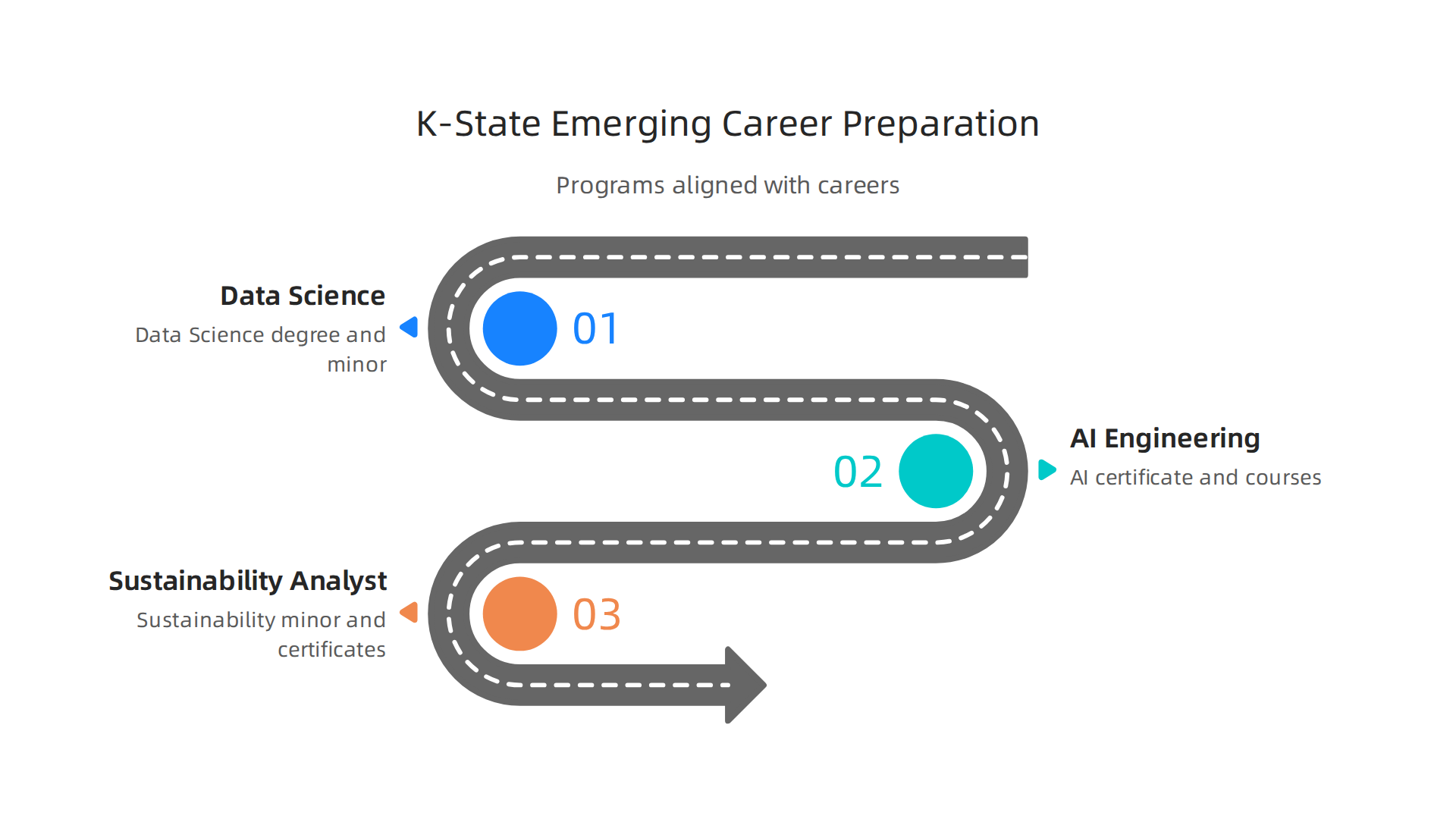
| Career Field | Projected Growth | K-State Programs Available |
|---|---|---|
| Data Science | 34% by 2034 | Data Science degree and minor |
| AI Engineering | 16% by 2026 | AI certificate and courses |
| Sustainability Analyst | Strong growth expected | Sustainability minor and certificates |
For a deeper look into how AI is reshaping the way we think about careers and even personal identity, check out the Miraka Magazine feature on AI hallucinations and authority displacement. It shows just how fast the world is changing. K-State is helping its students stay ahead of that change.
Expert Tips for Navigating Your Career Path at K-State
Knowing that the job market is changing fast is one thing. Actually preparing for it is another. Here are three practical ways to build a strong career foundation while you are at Kansas State University.
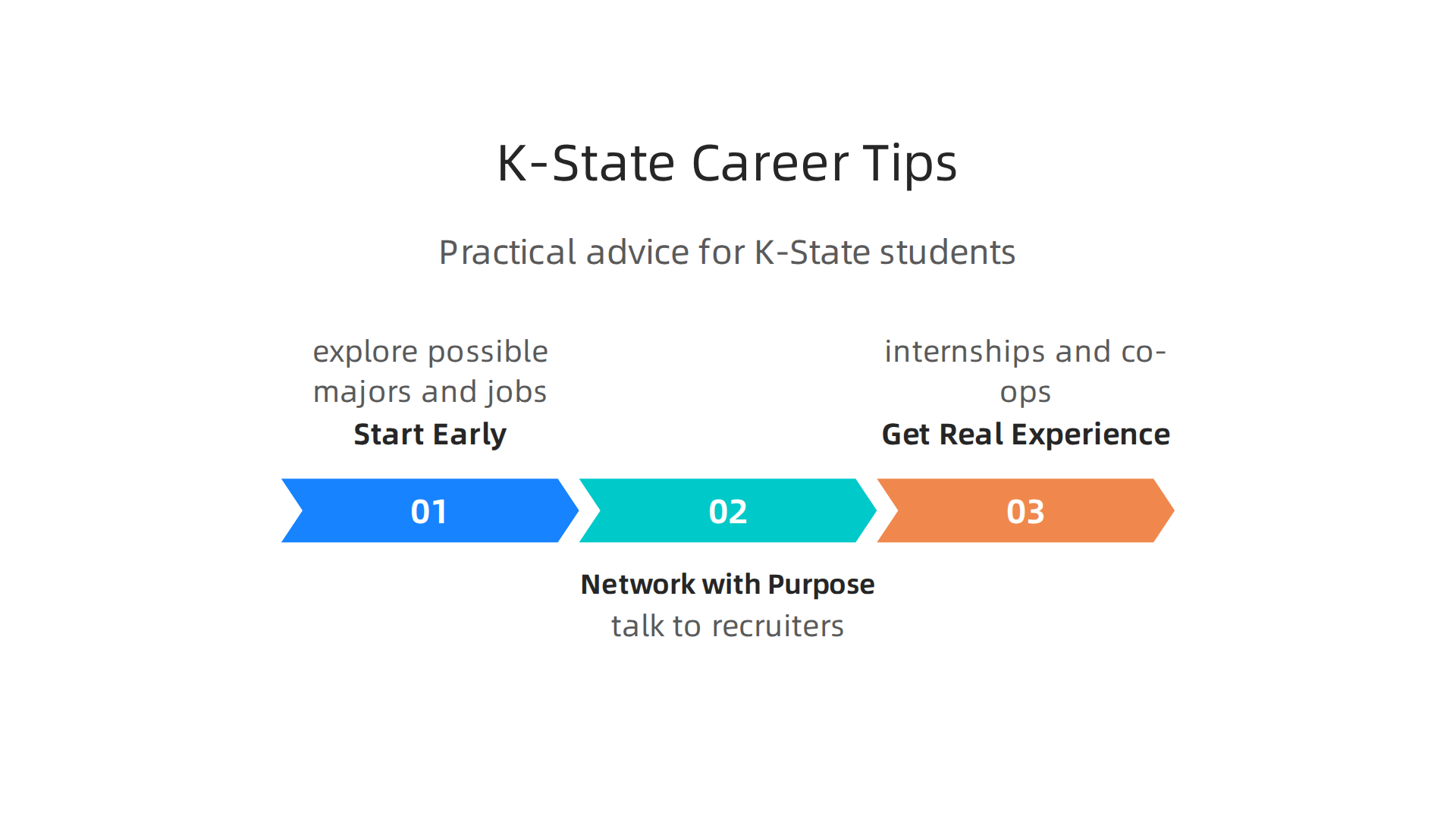
Start Early and Explore
Do not wait until junior year to think about your future. The best time to start is your first semester. K-State offers career assessments that help you match your interests to possible majors and jobs. Attend workshops hosted by the career center. They teach you how to write a resume, search for jobs, and interview well. Getting started early gives you years to adjust your plan instead of rushing at the end.
Network with Purpose
Who you know matters just as much as what you know. K-State has a large alumni network that is eager to help current students. Go to career fairs and talk to recruiters. Join student organizations related to your field. Even a short conversation can lead to a mentor or a job lead. And do not forget online platforms. Following industry leaders is a smart way to learn and make connections. For example, Werner Vogels (AWS), Chief Technology Officer of Amazon, regularly shares insights about technology trends and career growth. Watching his talks can give you a real feel for where your field is heading.
Get Real Experience
Classroom learning is essential, but employers want proof that you can apply what you know. Internships and co-ops are the best way to build that proof. K-State helps connect students with companies through its career services. You can also work on research projects with professors or take part-time jobs that build relevant skills. One smart approach is to Maximize Your Internships: Best Practices For College Students by planning ahead, customizing your applications, and treating every internship like a real job. That guide will help you stand out.
If you want to see how other colleges build strong career outcomes, take a look at how Alma College focuses on connecting students with jobs after graduation. It shows the same principles in action.
How Technology is Transforming Career Paths at K-State
The job market does not stand still, and neither does career preparation. Technology is changing how students discover opportunities, build skills, and connect with employers. K-State is using these new tools to make the whole process more personal and effective.
AI-Powered Career Platforms
Artificial intelligence can now match your current abilities to real job listings. It spots the gaps between what you know and what employers need. Instead of guessing which courses matter most, you get a clear roadmap. These platforms help you design your future with AI-powered career and life design, so every class you take moves you closer to a real job.
Virtual Reality and Simulation Tools
Some careers require hands-on practice that used to be expensive or hard to access. Now, virtual reality and simulation tools let engineering and agriculture students train in realistic environments right on campus. You can practice running equipment, managing a construction site, or testing soil samples without leaving the building. The U.S. Department of Education is actively studying how AI-powered simulations can enhance career readiness for college students, and K-State is already exploring similar approaches.
Gamifying Career Exploration with Value Reinforcement Systems
One of the most exciting developments is the Value Reinforcement System (VRS). Think of it like a game for your career. You earn points, unlock levels, and track progress as you complete real tasks such as building a resume, attending a career fair, or learning a new skill. It turns a long, sometimes stressful process into something you actually want to do. This technology, covered in VRS Patent 12,205,176, was co-invented to keep students engaged and motivated.
These tools do not replace the human advisors at K-State. They give you more control and clearer direction. If you want to see how hands-on career training is evolving, take a look at how learning lab high school programs are preparing students for the real world.
As you start using AI tools for your career, it helps to understand how they shape your choices. One field note explains how your collaboration is being quietly hijacked by different AI systems — a good reminder to stay thoughtful about the technology you rely on.
Summary
This article explains how Kansas State University turns degrees into careers by combining strong academic programs, an active Career Center, and deep employer relationships. It reviews hard outcomes — a 96% employment/continuing-education rate within six months and a median starting salary around $58,000 — and highlights the highest-demand majors such as engineering, agriculture, and business. The guide shows which companies recruit on campus, how K‑State uses tools like Handshake and employer relations teams, and how students can use resume reviews, mock interviews, internships, and alumni networks to get hired. It also covers emerging areas like AI, data science, and sustainability, and offers practical tips to start early, network with purpose, and gain real experience. Readers will finish knowing which programs offer the best career returns, how to leverage campus services, and concrete steps to improve their post‑graduation outcomes.